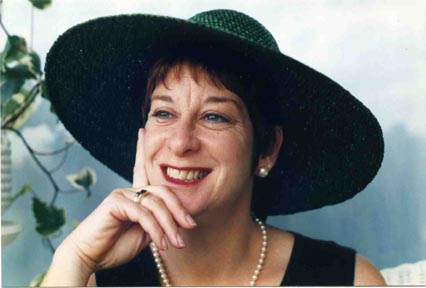
My Pia at Selexyz Dominicanen Book Store

Suze & Jens at the Beaumont Hotel Bar

Ursula's cozy Roost

Swee at her Beauty Lover's Salon

Ans & Rob at Plein 1992

The magnificent Sueli also at the Plein


September 20, 2009
Faith is much better than belief. Belief is when someone else does the thinking for us.
-R. Buckminster Fuller
The advent of the autumn new moon marks Rosh Hashanah, which this year is 5770 of the Jewish calendar, and began at sundown on Friday, September 18, 2009, in the common era calendar. Rosh Hashanah starts the “the Days of Awe,” the most sacred ten day period in the Jewish year, ending with “the Day of Atonement”, Yom Kippur, a day of prayer, fasting and solemn contemplation. The period is a time when Jews reflect on the activities and behavior of the past year, questing to continuously develop as better individuals in the future, and seeking forgiveness for transgressions, not only from God, but also from one another, and not solely for ourselves, but also for the collective sins of our community.
Like so much of the Jewish culture – this idea of community is essential. Prayer and reflection are typically practiced in community in a temple or synagogue. I was raised in more secular household where Jewish traditions, rites and rituals were principally practiced in the home. The need to attend ‘services’ in a synagogue was not a cornerstone of my upbringing. Yet, like many modern Christians who only attend church for their high holidays of Easter and Christmas, I, too, enjoyed the rituals of these High Holidays as practiced in a synagogue.
Unfortunately, in Maastricht there isn’t a liberal or reform synagogue to attend. Here, the small Jewish community is rooted in an orthodox practice with which I don’t identify. Given the devastation of all European Jewry in the Holocaust, having even a small congregation of Jews is significant.

Synagogue in Maastricht, photo by Herman Pijpers
Nevertheless, I personally find it more comfortable to keep my faith in my own way. And so, I offer this reflection for others who also find themselves without the fellowship of their particular community at this sweet time of year so that they remember that faith can always be found within oneself, can be accessed at will, anytime and anywhere.
***
Rosh Hashanah is also referred to as “the birthday of the world,” a time when we ask to be inscribed in “the book of life”. In general, food and music are the arteries for the heart of a Jew, and the apple is deeply associated with our New Year. It is a tradition to dip the apple in honey to remind us of the sweetness of life at this time of year.
When I miss the opportunity to be with community to celebrate, I choose a few alternatives that encompass the spirit of the occasion. First, I listen to an incredible CD recording entitled, “The Birthday of the World: The Liturgy and Music of Rosh Hashanah”, narrated by Leonard Nimoy with astounding music. (Yes, Star Trek’s own Mr. Spock is a Jewish Vulcan, oh vey!)
After listening to the liturgy and music, I typically try to commune with nature. Nature is my concept of God’s cathedral, and in nature I am better able to think about my Judaism, my life and my wishes for the new year to come. One year, I found this nature in my own front yard – in my apple tree.
This apple tree had rarely been appreciated or eaten of. A city girl by upbringing, having a yard and trees was an entirely new experience. However, I found myself deeply drawn to touch my tree, to take from it the sweet burden of its fruit. And in the act of tending my tree I came to myself. Relieving the tree of its offering – apple by apple – I also found myself growing lighter. This act of quiet, deliberateness drained from me the weight of the day-to-day burdens we all carry. Both the tree and I grew lighter and this “mindful” activity seemed in keeping with the spirit of Rosh Hashanah – a time to stop normal activity, to reflect.

Another remarkable thing happened while I pulled and twisted the ripe, meaty fruit from its source. I found myself harmoniously in the midst of something I otherwise fear – bees. Dozens of bees had discovered the sweet sustenance of decaying fruit that had already fallen. In order for me to harvest my share, I had to work in their company. Typically, I am afraid of these honey-making, stinging creatures. Yet, for no reason at all, I felt quite safe, somehow knowing that they were merely going about their business and would leave me to mine. So, a second miracle accompanied the act of picking my tree – I worked securely with my own fear.
The third small grace to befall me, for surely all holy enlightenments happen in threes, was my sudden ability to tend only what needed to be tended at the moment. By nature, I am a bit of an overachiever. My desk is littered with five to twelve projects and in my profession as a communications consultant, I’m frequently interrupted, even when I do manage to be working on only one project. Phone calls, e-mails, colleagues, and my own thoughts are constant barriers to “being here now”. Suddenly, picking these “lowly” apples, I felt no need to do anything else. I was content quietly circling the tree, methodically finishing one area before moving to the next. It felt like a clear metaphor for beginning my new year in more balance and contentment.
And so, I came to my new year with a sermon of self, spun from the branches of a tree of life.
Now, at this time of year, I remember to perform a mindful act each day, fully aware of the moment, and in so doing, relieve a burden or two from this hectic life of hyper-drive. I try to acknowledge and honor my fears and learn to work with them, rather than waging hopeless battles against them. And, finally, I attempt to see the beauty and necessity of performing one thing at a time, leaving juggling to the talented acrobats of those charming European circuses that have gained such recent popularity.

Vaeshartelt Castle, photo by Herman Pijpers
Maastricht offers astounding nature almost within her city boundaries. Limburg is graced with a contemplative beauty that allows one to find sustenance in God’s outdoor sanctuary. Community, indeed is where we create it. If each of us carries the spirit of our faith every day, practicing it year-round, we can find sanctuary in the heart of each human being, each element of nature, remembering that it is not where you are, but who you are that inscribes us in the book of life. I wish for everyone everywhere in the world, a sweet “New Year”.

 Peter never wielded his intellectual prowess but rather gently wooed me, and countless others who came to adore his gentle wisdom and quirky humor, by example. While I never became one of his students, preferring the Chaucerian and Shakespearean eras to his beloved 18th century, I nevertheless considered myself Peter’s protégé. In more general terms I was very much a baby duckling imprinted by his calm manner and sheer intellect: his qualities that shaped me for life. Peter took on an informal role as my protector from his somewhat crusty ‘business’ colleague whose abruptness could be quite abrasive and intimidating. The verbal onslaught often brought me to tears but Peter was always there afterwards to explain in calm and clear terms how to rectify any mistakes I may have made. Such patience and professionalism influenced me for life.


 Happy Birthday, my love. Today Martijn would be 58. This photo taken by our dear friend, David F, at one of the many good bye parties hosted for out leave-taking from Minneapolis when we headed to Maastricht in the summer of 2004. David resent me the photo with this lovely thought: "This picture always fills me with the joy of Martijn's playful, easy presence. It is one of life's great mysteries that I feel it still, as I know you do, my dear Suze. On this day of days, let us bask and be grateful that we were - and are - so blessed." Let us raise a glass to all of of our dear ones whose presence continues to evoke so much joy.


 Almost Moving Day
Yesterday was the birthday of playwright August Wilson, who said: "Confront the dark parts of yourself. ... Your willingness to wrestle with your demons will cause your angels to sing."


Public or Private:
Institutions Need Communications Ethics
Author's Note: This article was written on July 29, 2001 prior to the key events that have defined personal and professional life in the subsequent decade: 9-11 and the current fiscal debacle. At that time I was an adjunct faculty member University of St. Thomas Graduate School of Business, Minneapolis, Minnesota, USA, and the past president Public Relations Society of America, Minnesota Chapter. The company referenced was a major health care system, providing relevance in light of America's current bold health care initiative. I have added it to my Schaefer Communications website as well.
Allina Health System responded to the investigation of its operations by hiring outside communications consultants. Articles in the Star Tribune raised issues about the merits of this practice; a subsequent commentary piece struck an apologist chord for communications consulting.
Both parties miss the point. The real consideration is not whether organizations hire external expertise, the issue is about ethics, the role of professional communications, and the public’s right to know. Imbedded here is a sublime irony in the intense scrutiny of public organizations and relative disregard of private companies.
Professional communicators are in a unique position to guide overall decision-making at all levels of organizations, whether as insiders or outside counsel. A practitioner’s purest role is to track and analyze global and local issues, attitudes and trends, aligning the policies and procedures of an organization accordingly.
How do they do this? As was the case with Allina’s outside counsel, they use internal and external research, analyze the data, make recommendations that detail the impact of actions on the organization, and design communications programs to implement these recommendations, including how to respond to the media.
However, if Allina had and/or used a qualified senior communications officer in an executive management position of equal power and standing with its legal, financial, and operations executives, it could have avoided the problems that sparked the controversy to begin with. Hiring outside counsel to help in a crisis isn’t wrong. Allina’s seeming lack of dependence on ongoing ethical executive-level public relations practice is.
Lack of full and open disclosure about their operational practices, failure to cooperate with authorities, the arrogance of top management, are all aspects of the organization’s poor public relations. And least your reading public think that Mr. Quimby’s commentary speaks for our profession, it is never our role to “push the bounds” in any direction that is outside that of the public interest!
Many communications professionals, particularly those who choose the voluntary public relations accreditation (APR) offered by such national organizations as the Public Relations Society of America (PRSA), are committed to a professional Code of Ethics that includes such precepts as: “conducting their professional life in accord with the public interest; never intentionally communicating false or misleading information; and never engaging in any practice which corrupts the integrity of the channels of communications or the process of government.” It is their role to insure that the organizations they serve follow suit.
Unfortunately, it seems that Allina and many organizations use their professional communicators as mere order takers rather than the reputation managers they are trained to be. Worse, many practitioners aren’t trained or don’t adhere to these standards.
Professional communicators use methodology and theory from such social sciences as sociology, anthropology and psychology, to determine human behavior. They study journalism, economics and organizational development. The best and brightest are trained to think and anticipate. It is their job to help organizations link and apply their findings to the legal, operational and economic aspects of the organization. This advice and counsel provides the ultimate vehicle for organizational success because it directs its gaze outside the organization and holds high an ethical perspective.
Yet, what makes the news are the misuses or transgressions of the profession. As in any field, there are good and bad public relations practitioners and good and bad public relations practice.
This gets us back to the question about public vs. private disclosure. It is naïve to demand less from private institutions than from public ones. How outdated this mindset seems. The very technology that many private organizations use to their marketing advantage holds the equal and opposite disadvantage (their view) for full and open disclosure of operations. Only the most proprietary data need be protected in our information-driven world.
Forward thinking CEOs understand that reasonable maximum disclosure creates trust with their multiple constituencies. Trust leads to credibility. And credibility builds a positive reputation or image. Nothing sells their products, services or stock better than a positive reputation. Communication professionals are uniquely trained and qualified to serve the role of reputation manager within an organization. Bringing such counsel into the mix as part of business as usual will keep organizations more in the favorable court of public opinion and less in the expensive courts of law.